How to Get an RFID Sticker in the Philippines
Published August 6, 2026 · Updated August 24, 2026
The short answer: bring your vehicle, its OR/CR and a valid government ID to any RFID installation site — a toll plaza customer service centre, a partner fuel station, or a mall counter. Installation takes a few minutes and the tag is fitted on the spot. Since October 2025 you no longer need one of each: the One RFID, All Tollways programme lets a single enrolled tag work on every Luzon expressway, and enrolling is free.
What changed in October 2025 — read this first
Every older guide, including the previous version of this one, told you the Philippines had two incompatible toll networks and that most drivers needed an account on each. That was true for years. It is no longer the whole picture.
On 21 October 2025 the Department of Transportation, the Toll Regulatory Board, Metro Pacific Tollways and San Miguel Tollways launched One RFID, All Tollways. An enrolled tag — either brand — works across both networks on the Luzon expressway system: NLEX, SCTEX, NLEX Connector, CAVITEX, CALAX, C5 Link, SLEX, Skyway, TPLEX, STAR, NAIAX and MCX.
Two things worth being precise about, because they are where people get caught:
- Enrolment is not automatic. Having a tag is not the same as being enrolled. If you have never registered for interoperability, your tag still only works on its own network.
- It is free. Registration costs nothing. You enrol online through your provider — Autosweep at autosweeprfid-online.com/interop, Easytrip via easytrip.ph under the "One RFID, All Tollways" option — with your account details, a valid ID and your vehicle registration.
If you are happy running two accounts, you do not have to do anything. But if you have been topping up two wallets to drive to Baguio, that is now optional.
Step 1 — Decide which tag to get
If you are starting from scratch, pick the network that covers the roads you drive most. That is where your installation sites are, and it is the account you will reload. With interoperability enrolled, the other network still works — but the account, the balance and the customer service all stay with your issuer.
| Network | Expressways | Tolled km |
|---|---|---|
| Easytrip (Metro Pacific) | NLEX, SCTEX, CALAX, CAVITEX | ~241 km |
| Autosweep (San Miguel) | Skyway, SLEX, TPLEX, STAR, NAIAX, MCX | ~218 km |
A note on one that trips people up constantly, including older versions of this page: MCX is Autosweep, not Easytrip. So is TPLEX. Several guides still have those on the wrong side.
Broadly: north and Cavite coast is Easytrip, south is Autosweep. If your daily drive is NLEX, get Easytrip. If it is SLEX or Skyway, get Autosweep. Our Easytrip vs Autosweep comparison goes deeper if you are genuinely on the fence.
Step 2 — Bring the right things
Turning up without one of these is the single most common wasted trip:
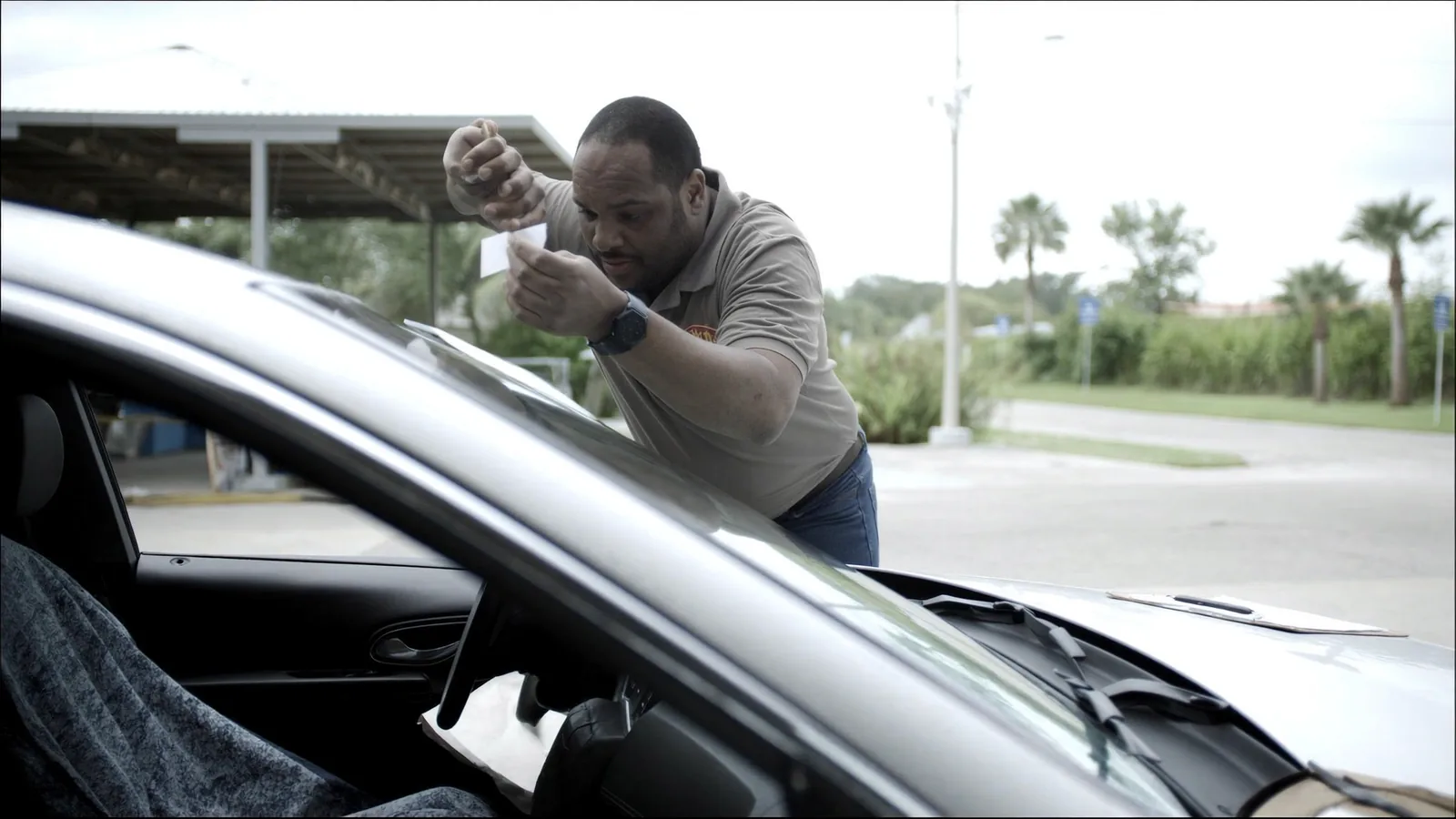
- The vehicle itself. The tag is fitted to your windscreen and read-tested on site. You cannot collect one to install later.
- OR/CR — the official receipt and certificate of registration. Original or photocopy is generally accepted; bring the original if you have it.
- A valid government ID.
- Cash for the initial load. Card acceptance varies by site and is the thing most likely to be unavailable when you need it.
Step 3 — What it costs
Reported figures at the time of writing: Easytrip fits the tag free and asks for a minimum initial load of around ₱200, which lands in your account as usable credit. Autosweep is reported at around ₱400 for a Class 1 vehicle — roughly ₱200 for the tag plus ₱200 minimum load.
Treat those as indicative rather than fixed. Sticker fees and minimum loads have changed more than once, they vary by vehicle class, and promotional waivers appear periodically. Confirm at the site before you queue. What is consistent is the principle: the load is your money and stays yours — only the tag itself may carry a fee.
Step 4 — Where to go
Four kinds of place fit tags:
- Toll plaza customer service centres. The most reliable option, since they exist to do this. Several of the busiest — Balintawak, Mindanao Avenue and the Parañaque CAVITEX centre among them — run 24 hours.
- Partner fuel stations along the tollways.
- Mall counters in selected commercial centres. Convenient, but more likely to require a booked appointment and more likely to be busy at weekends.
- Drive-thru installation lanes at some sites, which are the fastest when available.
Most toll plaza sites take walk-ins. Some mall sites want an appointment booked through the operator's online system first — worth checking the provider's site before driving across town on a Saturday.
Step 5 — After it is fitted
Three things to do before you rely on it:
- Note the account number. It is on the tag and on your paperwork. You need it for balance checks and for anything you might dispute later. Photograph it.
- Enrol in One RFID, All Tollways if you want a single tag to cover everything. Free, online, and it is the difference between a Baguio trip working and stopping at the TPLEX plaza.
- Learn how to check your balance. It takes under a minute and it is the whole difference between a smooth drive and a queue. See checking an Easytrip balance or checking an Autosweep balance.
Then price your first trip properly on the toll calculator so you load enough. A Manila to Baguio run is ₱981 each way for a car; a Manila to Batangas weekend is ₱459 each way. Loading ₱200 and setting off north is how people end up stuck at a barrier.
When it does not work
The tag will not read. Placement matters more than people expect. Metallic window tint and heated or heat-reflective windscreens can block the signal. If it fails at more than one plaza, go back and have the placement checked rather than assuming a balance problem.
It reads on one network but not the other. That is the interoperability enrolment, not a fault. Register and it resolves.
The barrier stays down with balance available. Deductions can post slowly. Check the transaction list rather than the balance figure, and keep the account number handy for the hotline.
You sold the vehicle. The tag is tied to the plate and the account. Sort out transfer or closure with the issuer — do not leave a funded account attached to a car you no longer own.
Frequently asked questions
Is an RFID sticker mandatory in the Philippines?
In practice yes for expressway travel. Electronic toll collection is the standard on Luzon tollways and cash lanes are not something to plan a trip around.
Is the RFID sticker free?
Easytrip is reported to fit it free with a minimum initial load; Autosweep is reported at around ₱400 including ₱200 of load for a Class 1 vehicle. Fees change — confirm at the installation site.
Do I still need two RFIDs?
Not since October 2025, provided you enrol in One RFID, All Tollways. Without enrolling, your tag still only works on its own network.
Can I install the sticker myself?
No. The tag is fitted and read-tested at an accredited site, with the vehicle present.
Which RFID works on NLEX?
NLEX is an Easytrip road, along with SCTEX, CALAX and CAVITEX. Skyway, SLEX, TPLEX, STAR, NAIAX and MCX are Autosweep. With interoperability enrolled, one enrolled tag covers all of them.
How long does installation take?
The fitting itself is a few minutes. Budget for the queue instead, particularly at mall sites on weekends.
Where these details came from
The One RFID, All Tollways details — launch date, coverage, enrolment method and that registration is free — come from GMA News and Easytrip's own guide, checked in August 2026. Sticker fees and minimum loads are from secondary sources and change periodically — confirm at the installation site. Expressway coverage and every peso toll figure come from our own rate data, verified against the Toll Regulatory Board and operator matrices.
We are an independent reference site. We do not sell or install RFID stickers, we cannot access your account, and we will never ask for your account number, card details or a one-time PIN.
More Guides
How to Check Your Easytrip RFID Balance: 4 Ways
Text BAL and your 12-digit account number to 09191601553 for a balance, at one peso a check — or use...
Read guideHow to Check Your Autosweep Balance: 5 Ways That Work
Text AUTOSWEEP BALINQ and your plate number to 0917 860 8655 for a balance in under a minute. Here a...
Read guideComplete List of Expressways in the Philippines (2026 Guide)
All operating tollways in the Philippines: routes, lengths, operators, RFID systems, and what each o...
Read guide